



 By
By 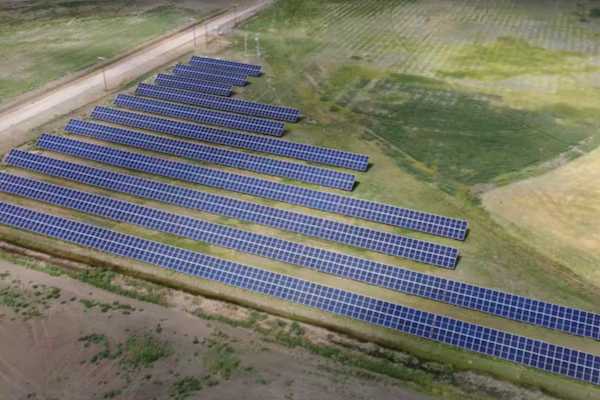
- Repurposing about 17,000 inactive well sites could generate up to 90–100% of Alberta’s residential electricity demand, according to RenuWell estimates.
- Micro solar grids may reduce costly rural transmission upgrades, stabilize peak demand, and create tens of thousands of construction jobs.
- Landowners and advocates support diversification but raise concerns about grid access, funding models, and ensuring cleanup obligations are not sidelined.
On a cold December afternoon near Taber, Alberta, a patch of land that once symbolized the province’s oil-and-gas legacy tells a different story.
Where a farmer could not plant crops because of tar-soaked soil from an orphan well, rows of solar panels now quietly generate electricity. The site is small, just a few acres, but it hints at a much larger question facing Alberta: can the infrastructure of a fossil-fuel past be repurposed to power a lower-carbon future?
Keith Hirsche thinks it can. Just outside Taber, his RenuWell Energy Solutions is piloting a concept that converts retired oil and gas well sites into micro solar farms. Alberta has nearly 250,000 inactive or marginally producing wells. Hirsche estimates that about 17,000 of them are well suited for solar development.
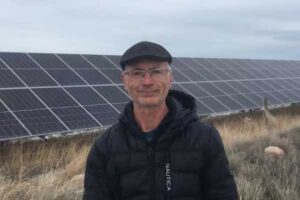
Keith Hirsche says the two micro solar farm pilot projects prove that it would be viable for the broader electrical grid. (Submitted by Keith Hirsche) Credit CBCNews
“This is an important potential part of the solution for decarbonizing the grid and also addressing this legacy problem of inactive and abandoned oil infrastructure,” Hirsche told CBC News.
The scale is what makes the idea striking. If those 17,000 sites were fully developed, Hirsche said the electricity generated could meet 90 to 100 percent of Alberta’s household consumption. RenuWell also estimates the buildout would create roughly 77,500 construction jobs and nearly 1,900 permanent renewable-energy positions.
The concept is not only about emissions. Alberta’s abandoned well inventory has grown to the point that the Orphan Well Association has raised alarms about cleanup costs. Premier Danielle Smith has floated the idea of requiring reclamation deposits, underscoring the financial burden of aging infrastructure.
RenuWell’s pitch goes further. By producing power close to where it is used, micro solar grids could reduce the need for expensive upgrades to rural transmission lines and help manage peak demand. “It’s almost like a shock absorber in the system in a way, because the whole electricity system is very rigid,” Hirsche said. “It basically needs to have the power, that maximum power, there when you need it.”
At one pilot site near Highway 3, the benefits are tangible. Daryl Bennett of the Action Surface Rights group says the project shows how unusable land can be put back to work. “They’re only three or four, maybe five acres. They’re not very intrusive,” he said. “They can be located in many different places, and they can stabilize the grid so we don’t have as many brownouts.”
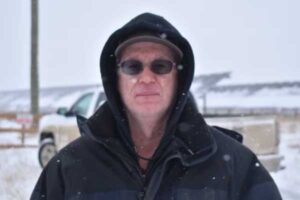
Daryl Bennett of Action Surface Rights, an organization of landowners that help other landowners navigate how to deal with the energy sector in Alberta. (Eli Ridder/CBC)
Solar’s intermittency remains a challenge. Wes Paterson, a consultant on the project based in Medicine Hat, says pairing small solar arrays with advanced batteries could change the equation. “We could start to create virtual power plants in remote areas,” he said, reducing reliance on long transmission lines vulnerable to storms and potentially supplying independent power to First Nations communities.
Not everyone is convinced. Dwight Popowich, an Alberta landowner and chair of the Polluter Pay Federation, questions how remote well sites would connect economically to the grid. “They’re nowhere near the grid, so if you’re going to put solar on there and then try to feed the grid, you got to hook up that grid somehow,” he said. He also worries that projects like RenuWell could distract from the legal obligation to fully reclaim abandoned wells.
Hirsche acknowledges that the funding and liability model still needs work, including how revenues are shared with landowners. For now, the pilots are supported by a mix of local and public funding. A nearby irrigation district covered half the cost, with the rest funded by Alberta’s Municipal Climate Change Action Centre.
Even critics see the broader need. “We understand that natural gas and oil is not going away tomorrow,” Popowich said. “But we also know that it is not a renewable resource.”
The next test will be larger. Alberta has nominated RenuWell for federal support through Natural Resources Canada’s Smart Renewables and Electrification Pathways Program. A one-megawatt solar farm is planned on an abandoned well site where grid support is most needed, with modelling support from Fortis and the University of Alberta.
For Alberta households and landowners, the takeaway is pragmatic. Repurposing abandoned wells will not solve every grid or cleanup problem, but it offers a way to extract new value from old liabilities. As Hirsche put it, the opportunity lies in combining energy systems rather than pitting them against each other. If the pilots scale, the province’s past may help power its future.
This story was adapted from an original written by Medicine Hat-based reporter Eli Ridder and published by CBC News.










Comments