


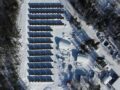
ONTARIO — The Ontario government has announced the completion of three battery energy storage projects in Vaughan and Guelph, adding 80 megawatts (MW) of capacity to the provincial electricity grid.
Developed by Alectra Energy Solutions, the lithium-ion battery facilities were completed on time and on budget. Together, they provide 320 megawatt-hours (MWh) of energy storage capacity, enough to supply approximately 80,000 homes during periods of peak electricity demand.
The projects include Vaughan 3, a 40 MW/160 MWh facility; Vaughan 1E, a 20 MW/80 MWh facility; and Arlen Energy Storage, a 20 MW/80 MWh facility in Guelph.
All three projects were awarded through the Independent Electricity System Operator’s (IESO) Expedited Long-Term 1 (E-LT1) competitive procurement, launched in 2022 to accelerate the development of new electricity resources.
Battery energy storage systems capture electricity during periods of lower demand and discharge it when consumption increases, helping improve grid reliability and manage electricity costs.
“Bringing these three battery storage facilities into operation is an important milestone for Alectra Energy Solutions and Ontario’s electricity system,” said Brian Bentz, President and CEO of Alectra Inc.
The installations come as Ontario prepares for substantial electricity demand growth. The IESO forecasts provincial electricity consumption could increase by as much as 90 per cent by 2050, driven by population growth, manufacturing investments and electrification.
Vaughan’s population is projected to approach 576,000 by 2051, while Guelph expects population growth of approximately 40 per cent over the next three decades.
Ontario has secured nearly 3,000 MW of battery storage capacity through recent competitive procurements, including approximately 880 MW under the E-LT1 program.
The projects form part of Ontario’s Energy for Generations strategy, which aims to expand electricity infrastructure while maintaining affordability and reliability.
By integrating storage into existing municipal electricity infrastructure, the facilities are expected to support growing communities while reducing the need for additional grid investments.





Comments