



 By
By 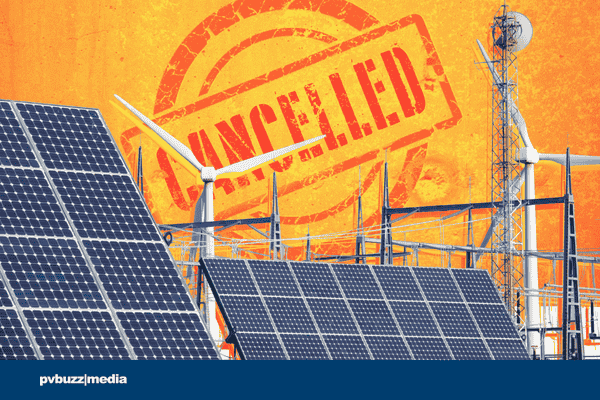
- More than $83 billion in clean energy loans and commitments are being canceled, de-obligated, or revised after a DOE portfolio review.
- About $9.5 billion originally intended for solar and wind projects is being redirected to natural gas and nuclear developments.
- Clean energy groups warn the shift could raise electricity costs and strain grid reliability amid surging power demand.
The U.S. federal government is reshaping its energy financing, pulling back from large portions of the clean energy loan portfolio built under the Biden administration and redirecting support toward fossil fuels and nuclear power.
The move underscores a sharp policy shift under President Donald Trump, as energy affordability, grid reliability, and rising electricity demand move to the center of the administration’s agenda.
What’s happening
The U.S. Department of Energy confirmed this week that it is restructuring, revising, or eliminating more than $83.6 billion in loans and conditional commitments originally issued for clean energy projects. About $29.9 billion has already been canceled or is in the process of being “de-obligated,” while another $53 billion is under revision.
Roughly $9.5 billion in previously earmarked financing for wind and solar projects is being redirected to natural gas and nuclear projects. The changes follow the rebranding of the former Loan Programs Office into the Office of Energy Dominance Financing, which now prioritizes fossil fuels, nuclear power, grid infrastructure, geothermal energy, and critical minerals.
Energy Secretary Chris Wright said the review found that a significant share of the loans were approved in the final months of the Biden administration, prompting a reassessment of how taxpayer dollars were allocated.
Why it matters
The decision lands at a time of accelerating electricity demand driven by data centers, artificial intelligence, and advanced manufacturing. The Trump administration argues that gas, coal, and nuclear generation can deliver firm, dispatchable power faster and more reliably than intermittent renewables.
Industry groups disagree.
The Solar Energy Industries Association has argued that utility-scale solar can be deployed more quickly than conventional generation. Data from the SUN DAY Campaign shows solar has outpaced fossil fuel capacity additions for more than two years and has overtaken wind as the largest renewable source on the U.S. grid.
Concerns are also emerging around costs. The American Clean Power Association warns that sidelining clean energy in regions such as PJM Interconnection could add hundreds of billions of dollars in electricity costs over the next decade due to tighter supply and higher wholesale prices.
What comes next
The DOE says the revamped financing office still has more than $289 billion in loan authority available, positioning it as the world’s largest energy lender. New funding is expected to flow toward nuclear restarts, natural gas infrastructure, geothermal projects, and domestic mineral extraction tied to energy security.
Absent clearer disclosure on which clean energy projects lose funding, uncertainty is likely to persist for developers and investors. At the same time, the widening gap between federal policy and state-level clean energy targets sets the stage for continued political and regulatory friction over how the U.S. powers its next phase of economic growth.









Comments