



 By
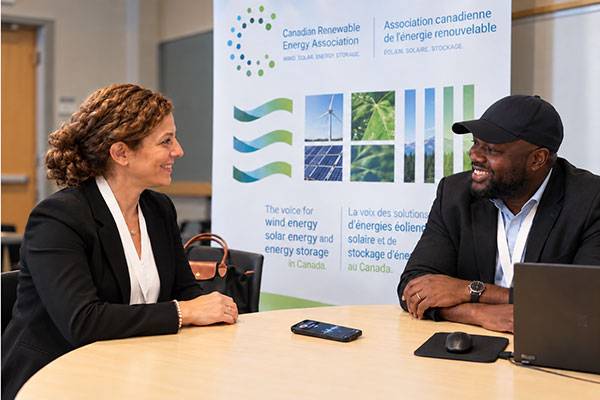
- Canada's renewable energy industry is experiencing renewed momentum, with growing demand, expanding project opportunities and businesses reporting increasingly busy operations.
- CanREA CEO Vittoria Bellissimo sees a $100-billion opportunity for Canada's wind, solar and energy storage sectors over the next decade.
- Despite growing optimism, workforce shortages, inconsistent policies and changing incentives could determine whether the industry achieves sustained growth or faces another boom-and-bust cycle.
Canada’s renewable energy industry appears to be entering a new growth cycle, driven by rising electricity demand, expanding procurement opportunities and growing interest in wind, solar and energy storage.
According to the Canadian Renewable Energy Association (CanREA), Canada ended 2025 with approximately 25 gigawatts (GW) of installed wind, solar and energy storage capacity. However, growth has been uneven. While energy storage expanded significantly in 2025, new wind and solar installations remained relatively modest.
The longer-term outlook is considerably stronger.
The Canada Energy Regulator projects electricity demand could increase between 26% and 85% by 2050, depending on the scenario. Meeting that demand will require substantial investment in generation, transmission and storage.
That was the backdrop for Electricity Transformation Canada (ETC) 2026, held October 19–21 in Toronto.
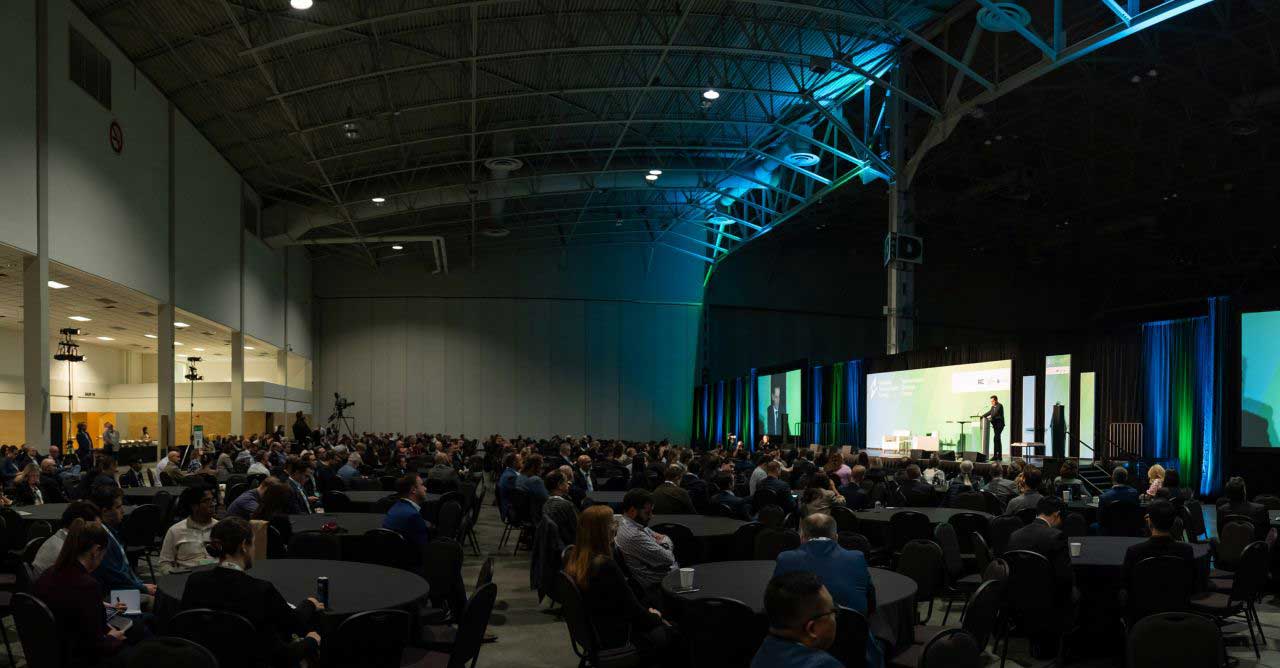
Delegates gather for the opening plenary session at Electricity Transformation Canada 2026 in Toronto, where industry leaders discussed the opportunities and challenges facing Canada’s expanding electricity sector. (CanREA)
According to organizers, the conference attracted a record 3,400-plus attendees and 225 exhibitors. Discussions focused heavily on affordability, investment, procurement, Indigenous partnerships and the infrastructure needed to support Canada’s electricity expansion.
But beyond the presentations and policy discussions, something else caught my attention.
The industry sounded genuinely busy.
An industry preparing for growth

Industry professionals connect at the Indigenous Pavilion on the exhibition floor at Electricity Transformation Canada 2026, which attracted more than 3,400 attendees and 225 exhibitors from across Canada’s renewable energy sector. (CanREA)
Walking the exhibition floor, I spoke with professionals representing solar developers, installers, equipment suppliers, wind energy companies and service providers.
The overwhelming sentiment was positive.
Some businesses reported growing project pipelines. Others described increasing customer interest, with several suggesting they were struggling to keep pace with incoming opportunities.
That enthusiasm was encouraging, particularly for an industry that has experienced considerable uncertainty around incentives, procurement and provincial energy policies.
Still, growing interest doesn’t automatically translate into completed projects.
Workforce availability, regulatory stability and the industry’s ability to maintain growth without depending on temporary incentives remain important questions.
I raised these issues during a one-on-one interview with Vittoria Bellissimo, President and CEO of CanREA, on October 21.
In conversation with Vittoria Bellissimo
PVBUZZ: I’ve been speaking with exhibitors and industry professionals, and the recurring message is that business is ramping up. Some say they can barely keep up. Does that reflect what you’re seeing across the industry?
Bellissimo: “I think everyone should be excited.”
She pointed to approximately 25 GW of installed wind, solar and storage capacity, alongside another 24 GW of projects currently in procurement.
“We think, looking forward, it’s a $100 billion opportunity in Canada over the next 10 years.”
Bellissimo emphasized that rising electricity demand will require developers to accelerate construction.
“Everyone is looking at demand forecasts that are going to require them to move faster than they ever have before, to build at a pace that we haven’t built before.”
PVBUZZ: One concern I’m hearing, particularly in solar, is that companies are generating leads but struggling to find enough installers. How do we avoid another cycle where businesses expand during incentive programs and disappear when those programs end?
Bellissimo: “They call that the solar coaster.”
She identified regulatory predictability as essential to creating a more sustainable industry.
“We need stable and durable policy mechanisms and regulatory regimes to make it easier for businesses to plan.”
Rather than repeating historical boom-and-bust cycles, Bellissimo wants a market where projects increasingly stand on their economic merits.
“We’re trying to get to an environment where we don’t need programs like this. We can just build projects because they make economic sense.”
PVBUZZ: Ontario continues to emphasize nuclear energy in its electricity strategy. How can wind, solar and storage secure a stronger position in the province’s future electricity mix?
Bellissimo: Affordability, she explained, must drive the conversation.
“Customers want affordable first.”
She highlighted Ontario’s competitive procurement processes, noting that battery storage and renewable energy projects had performed strongly against competing technologies.
“I think Ontario ratepayers do deserve to know what the costs of what they’re buying are.”
Her broader argument was that electricity planning should consider the comparative economics of available technologies.
“We should try to optimize inclusion of these three technologies in our power systems.”
My takeaway: optimism with a reality check

PVBUZZ founder and editor Derick Lila at Electricity Transformation Canada (ETC) 2026 in Toronto, where industry leaders gathered to discuss the future of wind, solar and energy storage in Canada.
I left ETC 2026 feeling more optimistic about Canada’s renewable energy industry than I have in some time.
Not because of ambitious government targets or impressive conference attendance figures, but because of the conversations happening between the people actually building this industry.
The recurring message was unmistakable: business is getting busier.
For solar in Canada, particularly, that is encouraging.
However, enthusiasm alone won’t sustain the next growth cycle. Companies need predictable markets, sufficient skilled workers, workable regulations and customers who understand the financial value of renewable energy.
Bellissimo’s comments reinforced something I’ve believed for years: Canada’s renewable energy industry must eventually become strong enough to grow without constantly depending on the next government incentive.
The opportunity appears substantial. The demand is emerging. And the industry seems increasingly ready to respond.
The real test now is whether Canada can turn that momentum into sustained project development rather than another ride on the solar coaster.
After ETC 2026, I’m cautiously optimistic that it can.









Comments