



 By
By 
- Natural Resources Canada modelling reportedly puts residential rooftop solar payback periods within this wide range, depending on jurisdiction and other variables.
- Relatively inexpensive grid electricity, high installation costs and financing can weaken the business case compared with leading rooftop-solar markets.
- The enormous difference between a 10-year and 30-year payback suggests Canada has multiple residential solar markets, shaped heavily by provincial electricity rates, incentives, net metering and installation economics.
An internal Natural Resources Canada analysis has put an uncomfortable number on residential solar economics in Canada: 10 to 30 years.
The May 20 memorandum prepared for Natural Resources Minister Tim Hodgson concludes that the economic case for widespread residential rooftop solar remains “limited” in most Canadian jurisdictions compared with leading international markets. The memo, obtained through Access to Information and initially reported by Blacklock’s Reporter, cites installation costs, electricity prices and financing as major factors.
That conclusion deserves attention, but not necessarily the interpretation that rooftop solar simply “doesn’t make sense” in Canada.
The payback problem is real
Residential solar systems can represent investments ranging from roughly $10,000 to $45,000, according to reporting on the memo. Recovering that investment through avoided electricity purchases can take decades, particularly in provinces where grid electricity remains inexpensive.
Canada also faces another disadvantage: installation costs. Compared with countries such as Australia, relatively high labour and project costs make the economics more difficult even as solar module prices have declined.
Federal incentives have helped, but they have not transformed rooftop solar into a mass-market retrofit.
The now-closed Canada Greener Homes Grant provided incentives for residential solar, yet only 38,500 participating households installed solar panels. By comparison, 229,000 installed heat pumps and nearly 146,000 completed window and door retrofits. Overall, more than 406,000 households received Greener Homes grants.
That disparity says something important about where homeowners saw value.
But a national payback number hides enormous differences
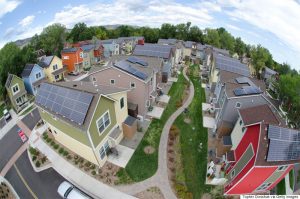
A solar incentive is a financial program offered by any federal, provincial/state, and local government towards the installation of solar panels. These financial incentives are implemented via policies geared towards the promotion of energy independence, job creation and carbon emission reduction.
The 10-to-30-year range may actually be the most revealing part of NRCan’s analysis.
There is no single Canadian residential solar market.
A homeowner’s economics depend on local electricity prices, solar resource, system cost, financing, roof conditions, consumption patterns, provincial incentives and, critically, how their utility compensates exported electricity.
A system approaching a 10-year payback presents a fundamentally different investment proposition from one requiring 30 years.
There is also a limitation to evaluating distributed solar exclusively through household payback. Rooftop generation can reduce electricity drawn from the grid, while distributed generation and storage may provide broader system benefits under the right conditions. NRCan itself has long recognized significant technical potential for solar integrated into Canadian buildings.
The memo reportedly acknowledges this distinction, noting that homeowner payback is only one consideration when assessing solar’s overall benefits.
Perspective: Canada may have a cost problem, not a solar problem
The most useful conclusion from the federal analysis isn’t that Canadians should stop installing rooftop solar.
It’s that Canada has not yet made rooftop solar consistently economical enough to become a mainstream household investment.
If systems require large subsidies to produce attractive returns, continually increasing subsidies is one possible response. But another is asking why installations remain expensive and why economics differ so dramatically between jurisdictions.
That shifts the conversation toward permitting, interconnection, financing costs, installation efficiency, electricity-rate structures, net metering and competition among installers.
Australia didn’t become one of the world’s leading rooftop-solar markets because it receives sunlight while Canada does not. Its market evolved around installation costs, policy and electricity economics that made residential solar attractive at scale.
The federal memo therefore presents less of an indictment of solar technology than a challenge to Canada’s residential solar industry and policymakers: if rooftop solar needs 20 or 30 years to justify itself financially, the question isn’t merely how much more government should subsidize it. It’s why it costs so much to deliver in the first place.








Comments