



CHINA — LONGi has reported two new efficiency milestones in crystalline silicon solar technology, according to recent third-party certifications.
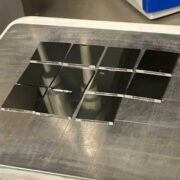
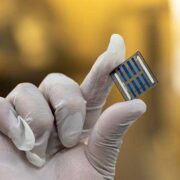
The company said its Hybrid Interdigitated-Back-Contact (HIBC) solar cell achieved a conversion efficiency of 28.13%, as certified by Institute for Solar Energy Research Hamelin. The result exceeds LONGi’s previous record of 28.04%, set earlier in January 2026, and approaches the theoretical efficiency limits for single-junction silicon cells.
In a separate development, solar modules built using HIBC cells reached an efficiency of 26.4%, based on certification from the National Laboratory of the Rockies. This compares with the company’s earlier reported module efficiency of 26%.
HIBC technology combines elements of several established cell architectures, including interdigitated back contact designs. LONGi said its development process included modifications to surface passivation and crystallization techniques, as well as changes in materials and manufacturing processes aimed at improving charge transport and reducing losses.
The company also indicated that HIBC-based modules are beginning to reach commercial-scale production. In April 2026, industry publication TaiyangNews ranked LONGi’s EcoLife series modules at the top of its list for mass-produced module efficiency, citing a reported production efficiency of 25%.
The announcements reflect ongoing competition among solar manufacturers to improve the performance of crystalline silicon technology, which remains the dominant photovoltaic platform globally. Efficiency gains at both the cell and module level can translate into higher energy output and lower costs per unit of electricity over time.
LONGi did not provide a timeline for broader deployment of HIBC-based products but said it continues to work on scaling the technology from laboratory results to industrial manufacturing.


Comments