



 By
By 
- BRC-Canada says proposed Scope 2 changes could raise PPA costs by 98% to 138%.
- The rules would require hourly clean-power matching and tighter geographic limits.
- BRC-Canada wants phased implementation, national matching boundaries, and protection for existing contracts.
Proposed changes to how companies account for electricity-related emissions could sharply raise the cost of corporate clean-energy deals in Canada and limit access for many buyers, according to a new analysis from Business Renewables Centre-Canada.
The report, Momentum at Risk, examines proposed revisions to the GHG Protocol’s Scope 2 guidance, the global framework companies use to report emissions from purchased electricity. The GHG Protocol has been consulting on changes that include hourly matching and stricter regional deliverability rules, with updated guidance expected in 2027.
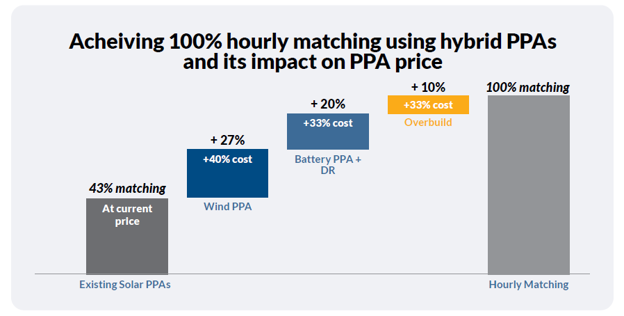
PPA cost increases with hourly matching. (Business Renewables Centre-Canada)
BRC-Canada says the proposed rules could require companies to match electricity use with renewable generation on an hourly basis, buy power within the same provincial or territorial market, and verify more detailed generation and consumption data.
Its modelling across 19 Alberta economic sectors found that moving from annual matching to full hourly matching could increase power purchase agreement costs by 98% to 138%. The organization warns that such a shift could slow the corporate renewable procurement market that has helped finance new wind and solar projects in Canada.
The geographic requirement may be even more limiting. BRC-Canada says corporate renewable procurement is currently most practical in Alberta, with fewer options in Ontario and Nova Scotia. Its earlier analysis found Canada’s top 100 companies would need 7.7 GW of renewable capacity by 2040 to meet Scope 2 targets, but only 19% of that demand is in markets with workable procurement options.
“Corporate PPAs are one of the most powerful tools we have for financing new renewable energy projects in Canada,” said Jorden Dye, Director of BRC-Canada. “The GHG Protocol’s aim to improve the accuracy of Scope 2 accounting is important, and we support it. But the pace and structure of these proposed changes would make PPAs significantly more expensive and geographically inaccessible for most Canadian buyers.”
BRC-Canada is calling for a phased approach: 50% hourly matching by 2030, 75% by 2035, and 90% by 2040. It also recommends national-level geographic matching in Canada and a legacy clause to protect existing contracts.
The debate highlights a growing tension in corporate decarbonization: more accurate emissions accounting may be necessary, but if rules move faster than markets can adapt, they risk reducing the very investment needed to clean the grid.











Comments