



 By
By 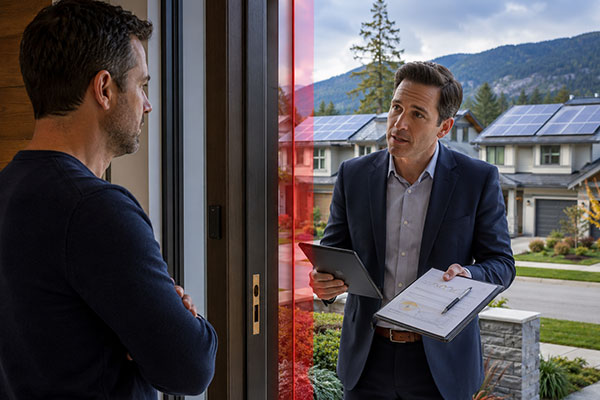
- Prohibited door-to-door solar contracts will not be binding on consumers.
- Sellers cannot arrange financing as part of these direct-sales contracts.
- Homeowners may still invite solar businesses to their homes.
Beginning August 1, 2026, British Columbia will prohibit unsolicited door-to-door sales of solar panel systems as part of broader changes to its consumer-protection laws.
The restrictions cover photovoltaic and solar-thermal systems, alongside products such as furnaces, heat pumps, air conditioners, water heaters, home-security systems and energy audits.
If a prohibited sale occurs, the contract will not be binding on the consumer. Any related credit agreement will also be unenforceable.
Businesses will also be prevented from offering or arranging financing as part of a direct-sales contract, addressing one of the tools commonly used to close expensive transactions before homeowners can compare alternatives.
There are limited exceptions, including situations in which the homeowner invited the company, sales conducted by certain licensed businesses and transactions at temporary locations such as trade shows. The province is not preventing homeowners from buying solar. It is removing the high-pressure doorstep environment from the transaction.
That distinction matters.
Targeting door-to-door solar sales
Door-to-door selling helped residential solar grow rapidly in parts of the United States, but it also produced misleading savings claims, opaque financing and systems priced far above market rates. The reputational damage has spread beyond the companies responsible, leaving many consumers suspicious of the entire industry.
PVBuzz Media has documented signs of the same model taking hold in Canada. In one Alberta case, a homeowner was presented with a $48,000 solar contract, approximately three times the expected price. Earlier reporting also examined how commission-only sales structures can reward closing contracts and maximizing system size rather than providing accurate, customer-focused advice.
B.C.’s decision recognizes that solar is too complex and expensive to be sold like an impulse purchase. Reputable installers should benefit when companies compete through transparent pricing, credible production estimates, clear financing and verifiable experience.
However, the exception allowing homeowners to invite solar businesses into their homes may leave a significant loophole.
Once a salesperson is inside, the same pressure tactics, misleading claims and rushed financing decisions can still occur. The effectiveness of the ban may therefore depend on how an “invitation” is obtained, whether consumers genuinely initiated the contact, and whether regulators prevent companies from using aggressive calls, online lead forms or misleading promotions to manufacture consent for an in-home sales visit.
Alberta and Ontario face pressure
The most likely province to follow is Alberta. Its existing door-to-door energy-sales ban excludes solar, but St. Albert and several other municipalities are already calling for stronger provincial oversight, while the Alberta government reviews its direct-sales rules.
Ontario also bans unsolicited doorstep sales of several household energy products, but solar remains outside its prohibited list.
B.C. has now established a clear precedent. The question is whether Alberta, Ontario or another province will act before more homeowners, and the industry’s reputation, pay the price.






Comments