



 By
By - Trail Road and South March BESS will deliver a combined 400 MW / 1,600 MWh of battery energy storage capacity.
- The projects are being developed by Brookfield Renewable, Scout Clean Energy and the Algonquins of Pikwakanagan First Nation.
- The investment reflects growing confidence that battery storage will play a central role in supporting Ontario's grid reliability and renewable energy expansion.
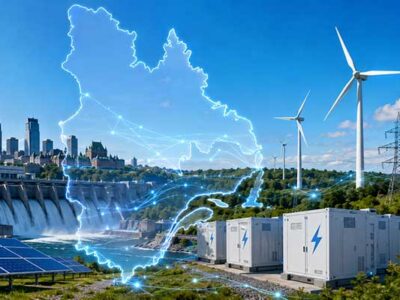
Ontario’s battery energy storage sector has taken another step forward after the successful financing of the Trail Road and South March battery energy storage system (BESS) projects, reinforcing the province’s push to build a more flexible electricity grid.
The two projects, being developed by Brookfield Renewable, Scout Clean Energy and the Algonquins of Pikwakanagan First Nation, will provide a combined 400 MW of power and 1,600 MWh of energy storage, enough to deliver electricity at full output for approximately four hours.
CIBC acted in multiple financing and banking roles for the transaction, underscoring the growing confidence of major financial institutions in Canada’s utility-scale battery storage market.
The projects arrive as Ontario experiences rapidly growing electricity demand driven by electrification, population growth and expanding industrial investment.
Battery energy storage systems are becoming an increasingly important part of the province’s electricity strategy by storing surplus electricity during periods of low demand and supplying it back to the grid during peak periods.
This helps improve grid reliability while enabling greater integration of renewable energy such as wind and solar.
The announcement also highlights the increasing role of Indigenous partnerships in Canada’s clean energy transition.
Equity participation by Indigenous communities has become a defining feature of many large-scale energy infrastructure projects, providing long-term economic benefits while strengthening project development.
In a statement, the Canadian Renewable Energy Association said investments like Trail Road and South March demonstrate how collaboration between developers, Indigenous partners and financial institutions is helping build the infrastructure needed to meet Canada’s growing electricity needs.
As more large battery projects reach financial close, Ontario continues to position energy storage as a critical pillar of a modern electricity system, complementing renewable generation while improving affordability, reliability and grid resilience.
Why It Matters
Ontario’s electricity demand is forecast to increase significantly over the coming decades as transportation, buildings and industry electrify. Utility-scale battery storage helps balance supply and demand, reduces grid congestion, improves reliability during peak periods and enables greater deployment of renewable energy without requiring immediate investments in new generation.









Comments