



ALBERTA — New independent analysis conducted by the Pembina Institute confirms Saskatchewan’s plan to extend coal-fired power to 2050 is one of its most expensive electricity options, costing tens of billions more than modern and viable alternatives.
The analysis estimates that extending and refurbishing Saskatchewan’s coal fleet could cost between $26 billion and $32 billion through 2050.
By comparison, converting coal plants to natural gas is estimated to cost between $18 billion and $25 billion, while expanding wind and solar generation would cost between $12 billion and $17 billion, plus approximately $1 billion for battery storage.
The findings come as Saskatchewan prepares for substantial growth in electricity demand, which the Pembina Institute says could double or triple over the next 25 years.
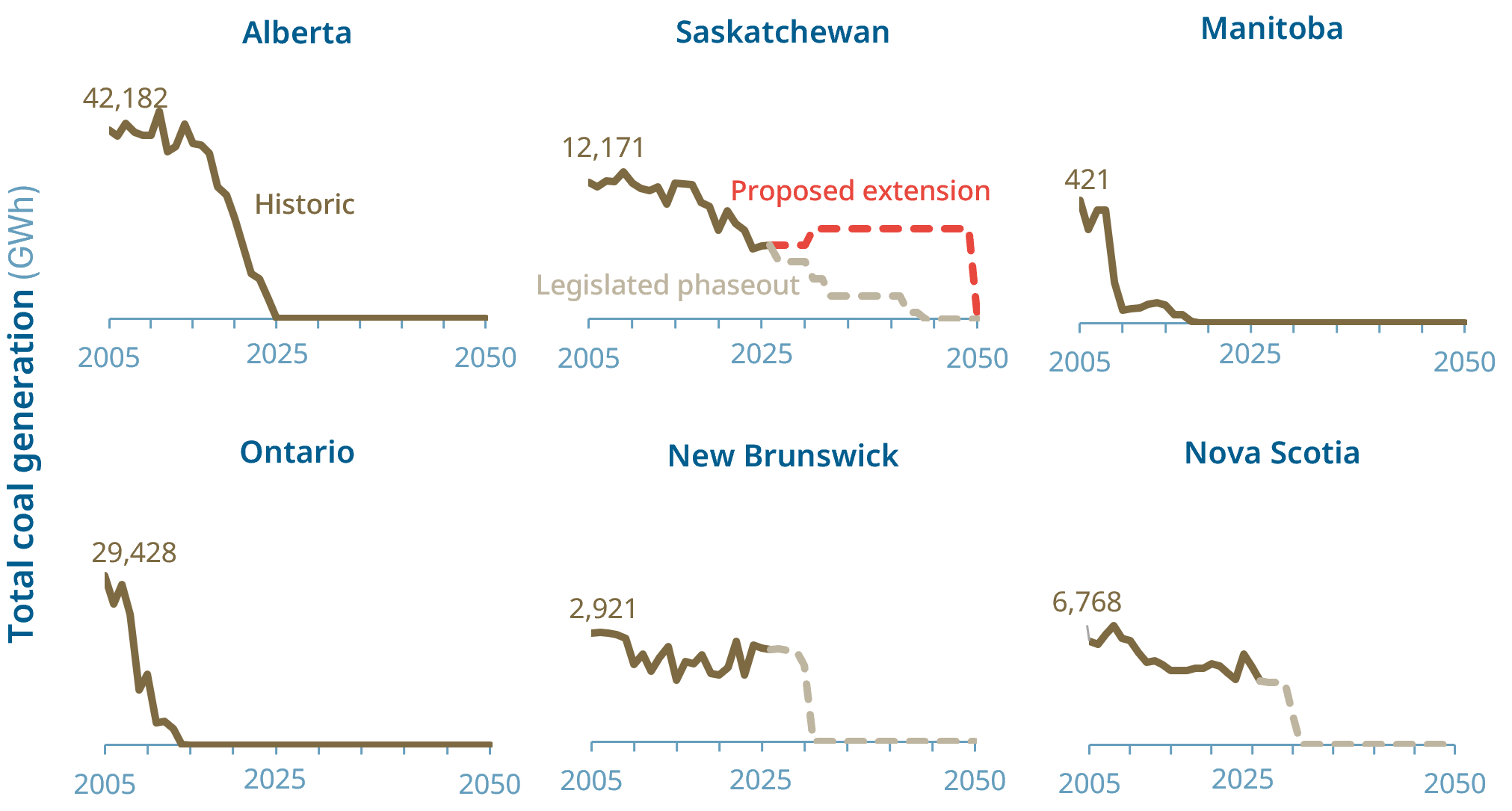
Historic (2005–2024) and future (2025–2050) coal generation across Canada by province
Coal extension could put additional pressure on electricity rates
Saskatchewan already has some of the highest electricity rates in Canada. The Pembina Institute cited internal SaskPower documents indicating electricity rates could double by 2040 under the province’s current planning assumptions.
The organization argues Saskatchewan could limit future increases by expanding lower-cost renewable generation, storage and other grid resources while phasing out coal.
“Saskatchewan doesn’t need to choose between affordability and reliability as it maps out the future of its electricity system,” said David Pickup, director of electricity at the Pembina Institute.
“Proven, clean, and lower-cost alternatives exist today, and the province has a real opportunity to benefit from these solutions while avoiding significant rate increases for consumers and billions in unnecessary costs.”
Pickup added that ongoing trade uncertainty and its potential effect on affordability make controlling electricity costs increasingly important.
Saskatchewan could become Canada’s last coal-dependent province
The province’s decision also puts Saskatchewan on a different trajectory from most of Canada.
Ontario completed its coal phase-out in 2014, while neighbouring Alberta eliminated coal-fired electricity generation in 2024, six years ahead of its original 2030 target.
Saskatchewan could consequently become Canada’s last province substantially dependent on coal-fired electricity if it continues operating the plants beyond 2030.
According to the analysis, Saskatchewan generated approximately 71% of its electricity from fossil fuels in 2025. Despite producing roughly 3% of Canada’s electricity, the province accounts for nearly one-quarter of the country’s electricity-sector emissions.
The Pembina Institute estimates delaying Saskatchewan’s coal phase-out from 2030 to 2050 would make Canada’s cumulative electricity-sector emissions over the next 25 years approximately 15% higher than under a 2030 phase-out scenario.
The organization also estimates coal-related air pollution could contribute an additional $160 million in healthcare costs in Saskatchewan.
Renewables offer lower-cost alternative
Saskatchewan has some of Canada’s strongest wind and solar resources, giving the province significant potential to expand renewable generation as electricity demand grows.
The Pembina Institute notes that wind and solar are currently among the lowest-cost sources of new electricity generation in Canada, with costs expected to decline another 25% to 50% over the next decade.
Battery storage, expanded transmission and demand-response programs could help integrate those resources while maintaining grid reliability, according to the analysis.
The report urges Saskatchewan to reconsider extending coal generation and instead pursue a diversified electricity system built around renewables, storage, transmission and other flexible resources.




Comments